
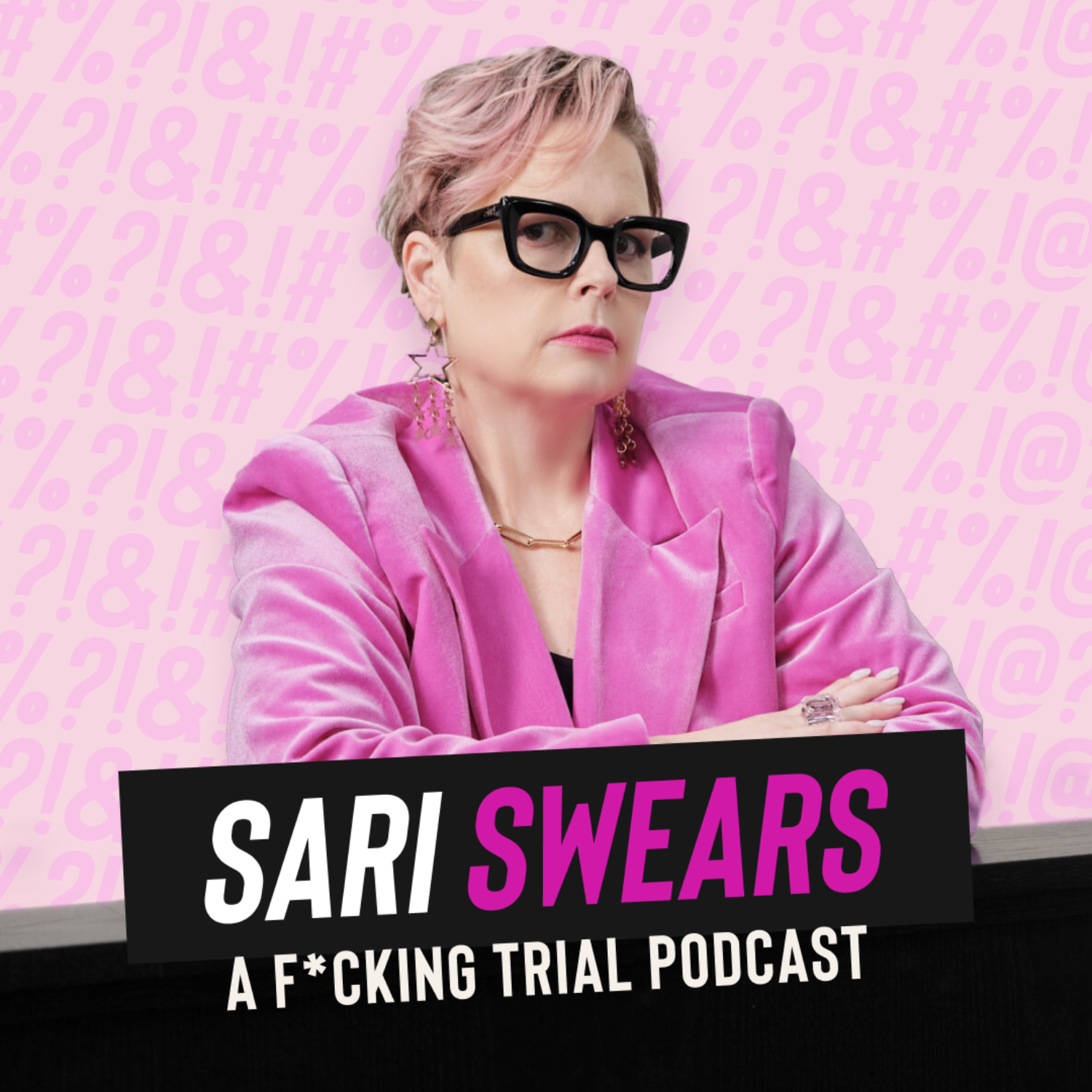
One decision changed Tom D’Amore’s (one of my FAVORITE clients) entire practice: He stopped being “great at settling cases”… and became a trial beast.
In this episode, Tom and I break down what actually shifted everything:
👉🏽 Why lawyers who don’t try cases get paid less, even when they settle
👉🏽 How fewer cases created bigger results
👉🏽 Why most serious cases aren’t about one bad actor, but systemic failure
👉🏽 And what it really takes to walk into a courtroom prepared — not hoping for luck
This is REAL trial work, real verdicts ($26.5M, $21M), and real growth.
This is the stuff NO one teaches in law school and very few people are willing to say out loud.
If you’ve felt that pull toward trial or you KNOW you’re capable of more…
Tune in NOW! 🎧
Love,
Sari
“If you’ve got 150 cases, you’re never going to excel at trial work. You just can’t do all the things you need to do to prepare properly. That’s why we keep our caseload small—so we can actually do the work.”
Tom D’Amore
TRANSCRIPTION
Sari :
You're listening to Sari Swears on the Sari Swears Podcast. Well, welcome to another episode of Sari Swears. I'm here today with my most favorite client of all time. I can't believe this is the first time that we podcasted together. We've talked about it probably for 20 years, 15 years, or however long we've known each other. Welcome, Tom D'Amore.
Tom D'Amore:
Well, it is a pleasure to be here. And yes, we have talked about this a lot of times, but you're too busy.
Sari :
I'm very busy, but I'm never too busy for you, although I think you would disagree with me there. Tom of Love, which is how it is spelled, D'Amore and how it's translated. Tell me your background before we get going and talking about how great you are and how great I am, because we're going to talk about both today. But you didn't start out as a trial lawyer. I just love your background.
Tom D'Amore:
I did not. I got out of undergrad and my professors told me it'd be a good idea to go to a CPA firm because I majored in accounting and political science. And so I went to work for Arthur Anderson in San Francisco. I lasted two years and a day, so that I got certified. And then I-
Sari :
Because you knew that you didn't want to stay there?
Tom D'Amore:
I knew I did not want to do that for the next 50 years.
Sari :
Okay.
Tom D'Amore:
And so I had already wanted to go to law school and I was delayed to go to law school. So I took off for Pepperdine Law School because they had agreed to admit me without going through that procedure all over again.
Sari :
Okay. So you got your law degree from Pepperdine?
Tom D'Amore:
I did.
Sari :
I don't know if I knew that, that's pretty cool. Pepperdine is a beautiful campus. Oh my goodness.
Tom D'Amore:
Yes. I did not enjoy being in Malibu as much as I should have.
Sari :
Because you were studying so much?
Tom D'Amore:
I was studying.
Sari :
Yeah. Yeah. So what brought you to Oregon? How'd you get up here then?
Tom D'Amore:
I met my wife at Arthur Anderson and she was from here and we were in San Francisco and decided that maybe trying to buy a house in San Francisco wasn't a great idea. And she convinced me to move up where her parents were in Oregon. So I've been in Oregon since, I guess, the last 35, 40 years.
Sari :
I grew up in the Bay Area. I love the Bay Area.
Tom D'Amore:
Yeah. We love to visit the Bay Area. I just don't want to live there.
Sari :
They're all trying to buy real estate there. So when you went to law school, were you thinking that you were going to be a PI attorney?
Tom D'Amore:
No. I mean, with the CPA background, coming out of law school, everything was business related or business litigation. Bankruptcy, I went to work for a bankruptcy firm that did a lot of commercial litigation. And I just fell into a couple of PI cases, just little old junkie auto cases. And I said after being at the CPA firm and the law firm that I went to work for for a year or so, I just decided that I like this contingency fee thing that personal injury lawyers do as opposed to trying to bill two-
Sari :
Billable hours?
Tom D'Amore:
Yeah, 2000 or 3000 billable hours for somebody else.
Sari :
Did you start in someone else's firm or did you open your own PI firm right out the gate?
Tom D'Amore:
I opened my own PI firm in California before we moved to Oregon.
Sari :
Oh, I didn't know that.
Tom D'Amore:
Yeah. And so I finished up those cases there, moved to Oregon, went to work for another business litigation firm because I was a new guy in town, business litigation in Portland, and then kind of moonlighted for my last six months at that business litigation firm doing PI cases. And that's how we started. And a friend of mine and I, we got a full page Yellow Page ad, which was a big deal and really, really expensive back then.
Sari :
That's really dating you. Yellow Page ads.
Tom D'Amore:
Yes, it is. So I'm pretty old.
Sari :
Well, you say you're a new guy in town and it's so fun to think about that because you are the guy in town. Everybody in Oregon and several people outside of Oregon, of course, knows who Tom D'Amore is because now you have, I won't say the biggest PI firm, but a very well known PI firm. Tell me a little bit about the makeup of your firm.
Tom D'Amore:
We started out just like a lot of solo practitioners. I struggled along. I tried to make sure I learned everything I could about the personal injury practice and we just grew over the years. I was settling most of our cases and then finally John Colleti, another attorney here-
Sari :
He's one of the cases in the book, as well as yours.
Tom D'Amore:
Right.
Sari :
By the way, I will say, if you're watching this podcast, Tom may look familiar if you have the book because he's the model in the book. So a lot of people sometimes, when they meet you, they're like, if they don't know you, which most people do, they're like, "Wait a minute, something about you looks familiar." And it's like-
Tom D'Amore:
Some people, that's the only way they know me is from the book.
Sari :
Yeah. Yeah.
So Coletti is also-
Tom D'Amore:
Coletti had spent some time with you and he said, "That would be a good person to spend some time with in terms of-"
Sari :
Thank you, John.
Tom D'Amore:
Yes. And on top of it, she's right here in Portland. And so that was my start and we met and I said, "I need to start trying a lot more cases."
Sari :
Yes.
Tom D'Amore:
And thank you very much for getting that done for me.
Sari :
The story from my point of view is, you called and said, "I'm part of a group in Portland and the group is the group that has no name."
Tom D'Amore:
That's right. The no name group.
Sari :
That sounded very mysterious. And I want to try more cases and I hear that you're the person to help me. So boy, did I ever create a monster after that. What made you want to start trying cases? What made you go from wanting to settle to trying cases?
Tom D'Amore:
It became pretty clear to me from an accounting standpoint that you're limited if you're just settling cases.
Sari :
How so?
Tom D'Amore:
The insurance company has figured out that this person is not going to try a case, and so they're not going to offer you as much money.
Sari :
Because I would think a lot of people tend to think, well, it's safer to settle cases. You'll make more money that way because it's such a big risk to go to trial. But what I'm hearing you say is, but that grows your reputation. And so even when you do end up settling cases, because not every case needs to be tried, you get more value because they know that you'll try it if you have to.
Tom D'Amore:
That's right. And for a volume practice, if you've got hundreds of cases, maybe that's all you can do, is to settle cases. And maybe that is more financially lucrative, but I just have no interest in having hundreds of cases.
Sari :
Well, that's a great point because so many people come to me and what we are really becoming known for is training elite trial lawyers. I'm not interested in just helping some rando, which they call all the time. "Hey, sorry, I've got a trial on Monday." I'm like, "Okay, bye-bye." "But can you help me?" I'm not interested in that. I want to develop lawyers over time.
And one of the things that they're always saying is I don't have any time. And I say, "Well, how many cases do you have on your caseload?" "150." Well, no shit, no wonder you don't have any time.
Tom D'Amore:
That's right.
Sari :
How do you manage that though? I mean, you still have cases and lots of things to do, but you also have people that help you and you don't take that case.
Tom D'Amore:
Yeah. We've got seven attorneys now, 20 staff people. And so we have people that help out, but we're down to probably 50 cases for seven attorneys.
Sari :
That's amazing. I love that you said that.
Tom D'Amore:
Yeah. Because like you said, you would never be able to excel, do all the things you need to do on a case to take it to trial. Or if you are, you're going to be unprepared when you're getting there if you've got a bunch of other cases.
Sari :
That's right. Well, you were a mastermind before that even existed, right? You're my first non-mastermind mastermind, before I started that program because we've spent years together working up cases and you say that you book time with me because it forces you to prepare.
Tom D'Amore:
Exactly. That was my thing was to get in with Sari so we could really start getting ready for the case-
Sari :
Right, right. So one of the first cases we actually saw all the way through trial was the one that got the highest ever recorded verdict in that county, which is the one in the book about the sexual abuse by the anesthesiologist. But you've had several other cases since then and two particular cases that went to trial that you hit big on. Not that that's what we're all about, but it's sure fun when that happens.
Tom D'Amore:
It pays the bills.
Sari :
It does. It does. So let's talk about the first one for a minute, which was a trucking case. And I think from that case, you really got invested in trucking cases.
Tom D'Amore:
Yes.
Sari :
I love trucking cases.
Tom D'Amore:
Well, I love trucking cases too. And I even got certified as a trucking attorney because of that case.
Sari :
Well, that's you, when you get interested in something and suddenly you're the president of the organization eventually and certified in it. So yeah, you're now involved in ATAA, I think.
Tom D'Amore:
That's tight. On the board of ATAA, which is Academy of Truck Accident Attorneys.
Sari :
I thought we were not supposed to use the word accident. So I always think of that when I hear that title. I've spoken for them.
Tom D'Amore:
It's okay because the public thinks of it as accidents.
Sari :
I gotcha. I gotcha. No, when I spoke for... Is it ATAA or AATA?
Tom D'Amore:
ATAA.
Sari :
Yeah. So, oh my goodness, Eric Penn. He texts me afterwards. He's like, "You swore more than I swear. That's crazy." But here we are, Sari Swears, if you're a longtime listener, you've probably heard me say practice makes progress and what better way to practice than with a fellow group of trial attorneys in person and with me.
Our two-day Command the Courtroom Masterclass Sessions put the H2H method into action and I'm there every step of the way with live coaching and feedback and finish mama fierceness. Here's what Kent had to say about our masterclass.
Speaker 3:
Out of every program I've been to, I've taken good points away, but out of this program, everything I've learned has been new and has been something I can implement on day one into my practice and into my next trial. And I feel a greater comfort than I've ever felt before walking into a courtroom and getting to speak with my friends in the voir dire panel.
Sari :
Now, seats are limited. These are small group, high impact courtroom sessions, not an auditorium full of board attorneys and dull lectures. If you want to change the way you go to trial and turn your practice into progress, visit sariswears.com/masterclass to register for a 2026 class today. That's sariswears.com/masterclass. So let's talk about that first case. So this was a very interesting case that you and I worked a long time on with a kind of a road-ragy incident between three truckers and another professional driver.
Tom D'Amore:
You got it.
Sari :
So give us a little overview of that case.
Tom D'Amore:
Well, it was three, as you said, three truckers and a fourth trucker that was moving a mobile-
Sari :
Motor, no, mobile home.
Tom D'Amore:
Mobile home cross country. So he had another commercial driver and his vehicle was a lot faster than the other three. The other three didn't like the way that he was passing them. And so the four of them got into a road rage and they were passing each other, they were brake checking in each other. In other words, getting in front and slamming on their brakes. They were just barely making passes of vehicles with other people coming in the other direction. And this went on for like 90 miles.
And so therefore we had 20 different witnesses that saw this happening. Eventually, unfortunately, one of the semi-trucks was coming around a corner and hit our clients head on, killed the wife and seriously injured the husband. And so the issue became-
Sari :
I was going to say, so let's talk about what the issue was.
Tom D'Amore:
The issue became, was it just the passing vehicle that crashed into our client as an at-fault party? And that was an easy one. And he went to jail for seven and a half years, but the mobile home that kind of kept him out in the passing lane where he couldn't get back in for a while, we brought a claim against that company also.
Sari :
And that was important to show that he was a part of this. Why?
Tom D'Amore:
Because frankly, the one that hit our client head on only had a million dollar policy and they immediately offered that. And so we went strictly against the mobile home company for their negligence and recklessness in causing the crash.
Sari :
And so what I love... My favorite part of this working this case up is that we got together and worked it up for a while. And one of the things that I talk about in my opening template is that we never tell the story from the plaintiff's point of view.
And you came in one day, and this is what I love about this, because I think so many people out there are teaching you, especially now with big data, right? "Do not trust your instincts. You can't trust your instincts. Trust the data, trust this." Big data is helpful for sure, but it's the new reptile, right? There's something new all the time, as the answer, and as we know, nothing is the answer, except for you, the attorney. I always think you are the answer.
And you came in one day and you said, "I know that we've worked this up telling it from the defendant's point of view, but I just really feel that I want to tell it this way." And you started with a picture, remember this?
Tom D'Amore:
Yep, I do.
Sari :
Of the couple that was in the car and telling it from their point of view and kind of flipping how we put the opening together. And what did I say when you came in and said, "I want to do this."
Tom D'Amore:
You might have said it right away, but you said, "If you really feel that strongly, go with it."
Sari :
That's right. And that's why I think a lot of people like the H2H method because of course we have the ways that we do things, but I'm always saying, "I'm not the expert in your case. You're the expert in your case. I'm not going to be the one standing up there delivering the opening, you are and you've got to feel it." Talk to me a little bit before we tell people about the outcome in that case, about the H2H process and how it has helped you grow as a trial attorney.
Tom D'Amore:
Well, I did grow up a little bit on David Ball.
Sari :
Yeah. Who hasn't really?
Tom D'Amore:
Yeah. And for me, the H2H method by far is that you make me get up and do it.
Sari :
Yes.
Tom D'Amore:
That is for me, because I would write out stuff for hours and then rewrite it, but never stand up and do it. And that was the benefit of coming to you, because day one, you made me stand up and do it.
Sari :
Stand up, let's try it.
Tom D'Amore:
Even if I didn't know the case well enough.
Sari :
That's right.
Tom D'Amore:
I was learning it by doing it.
Sari :
That's right. That's right. So that's a big part of it. What do you think about our voir dire method?
Tom D'Amore:
I use the voir dire method in virtually all of my cases.
Sari :
Yay.
Tom D'Amore:
I need somewhat of a format, but a loose format.
Sari :
Yes.
Tom D'Amore:
And so I try and use that format and follow it pretty closely.
Sari :
Wonderful. So the outcome in the trucking case was?
Tom D'Amore:
It was $26.5 million, which the insurers had to pay. We've got very good bad faith law in Oregon.
Sari :
Lovely. Lovely, lovely. And that was your first eight figure.
Tom D'Amore:
That was my first eight figure.
Sari :
Wonderful. So then recently we are working up a different case, which was a shooting case. You kind of do all kinds of cases, Tom. Again, you'll try anything.
Tom D'Amore:
It's got to be interesting.
Sari :
It's got to be interesting. Yes. And you care very much about your clients. I will say that too, is that you really do have a heart for plaintiffs. I think it takes a certain kind of person to do this work and you're definitely that person. So tell us about this case. This was a completely different case, but very, very interesting.
Tom D'Amore:
It was, and it was actually my first shooting case.
Sari :
That's right.
Tom D'Amore:
Because I always had the mindset that shooting cases are like a fight in the bar, he said, she said, and that's just going to be too hard to prove. But I learned that if you look a little bit further into the case, where did it occur? Who was in charge of that property? Who owned that property? What was the security guard... It was a security guard that killed our client that just walked up in front of his car because they didn't like our guy being at that parking lot, and waited for our guy to slightly move his vehicle and then three shots right through the front windshield killing him.
Sari :
Well, it just reminds me of what's been happening in the news the last couple of days and how the narrative out there is she was trying to run him over or just comply. So I immediately thought of your case.
Tom D'Amore:
It was very similar to the Minnesota case.
Sari :
Yes.
Tom D'Amore:
Very similar.
Sari :
Absolutely. And so what I think I've learned the most from learning with you is that, and working with you is that nearly every case, unless it's a little car crash case, is systemic failure. And that's what happened here because it'd be very... The security guard's fault, he went rogue. How can you blame, I think it was the property management company-
Tom D'Amore:
Yeah, a property management company.
Sari :
So how did we get there to blame the property management company?
Tom D'Amore:
Through discovery, we started looking at the emails that went back and forth between the property management company and the, what am I calling him, the guy that shot him. He would be from the security guard company.
Sari :
Right.
Tom D'Amore:
And so we looked at all these emails and they basically, you could see that they were targeting this one individual.
Sari :
Who was coming to, I think, Lowe's and picking up their pallets during the pandemic.
Tom D'Amore:
Right. It was one fellow during the pandemic that had decided to make money by picking up pallets, which Lowe's allowed him to do.
Sari :
Which helped Lowe's.
Tom D'Amore:
Yeah. But he was very disrespectful to the security guards and they didn't like him. And so they kind of just laid and waited for him that day.
Sari :
Saw him drive in.
Tom D'Amore:
Saw him drive in. A security guard followed him. The security guard parked his car in a way that our guy couldn't easily move out of and then walked up to our guy and said, "Get out of the car. You're going to be arrested." This was a security guard, not a police officer, and a security guard's no different than you and me.
Sari :
That's right.
Tom D'Amore:
And our guy flipped him off, like he was going to-
Sari :
I'm not going to get out of the car. Yeah.
Tom D'Amore:
"I'm not going to get out of the car for you." And so the security guard planted himself, much like the Minnesota case, directly in front of the vehicle and said, "If you move, I'm going to shoot." And that's exactly what he did and killed him while his wife was sitting right beside him.
Sari :
And we know that he had tried to move the car before he said that, to get out of there, like I'm getting out of here. And the guy said, "If you move, I'm going to shoot you." And he put the car in reverse and then he shot him.
Tom D'Amore:
And as he was backing up he shot him.
Sari :
He wasn't even coming toward him and he shot him.
Tom D'Amore:
And then that was the whole defense in the case, that he feared for his life, which was not true.
Sari :
Which was not true. And we later found too, or as we were prepping for the case, that these security guards didn't even have the proper, what was it, to carry the-
Tom D'Amore:
Didn't have the certification to carry a gun.
Sari :
Yeah.
Tom D'Amore:
This security guard did not.
Sari :
And tell me what the opening line was in your opening, because that was something that they actually said, right? Smile-
Tom D'Amore:
Oh-
Sari :
Be polite.
Tom D'Amore:
Smile, be polite, but be prepared to kill everyone you meet.
Sari :
That was actually something that they-
Tom D'Amore:
That was a policy. A policy, which of course they tried to reject that we had that policy or that was a past policy, but the jurors did not like that. And even though the certification, does this guy have a gun that's certified? Arguably, that didn't matter so much, but the jury just, when they heard that, that not-
Sari :
It's a piss off point.
Tom D'Amore:
Yeah. Not only is this guy out there shooting people, but he's not even certified to carry a gun.
Sari :
Yeah. A big part of that case too is why did they even need guns in the first place? I mean, this is a Lowe's-
Tom D'Amore:
And it was a shopping center.
Sari :
Yeah. It doesn't make any sense. Now, I remember in that case we worked quite a bit on the story and we had you actually being the security guard, holding a gun, making loud noises like bang, bang, bang. And I know we had a conversation about, "Well, I'm going to show the video, so why do I need to do this?" So how do you think that worked, actually telling the story, you playing the characters before they actually saw the video?
Tom D'Amore:
I think it played very well. I think you can't overdo it, especially-
Sari :
For sure.
Tom D'Amore:
... if you've got a video, it doesn't make sense to spend a lot of time, but just to show the positioning of where people were and when you're trying to defend against their defense that, I feared for my life. This was not a situation where a person feared for their lives. And in our case, it was a big deal that it's a stationary vehicle. I mean, it's not moving, like the Minnesota case, that vehicle was stationary. It wasn't moving until-
Sari :
And once it did move, the tires were turned away, but anyway.
Tom D'Amore:
Yeah. So there were all those details that we kind of wanted to emphasize, but not overdo it since we had the video. And we probably showed it two or three different times, even though it was very shocking.
Sari :
It's very shocking. I mean, we had mock jurors, I know that a couple times we tested it, tearing up, one person left. I mean, it was shocking information to watch a man be murdered.
Tom D'Amore:
Yeah. Not many people see that.
Sari :
No. In front of his wife.
Tom D'Amore:
In front of his wife who just went hysterical.
Sari :
Was screaming.
Tom D'Amore:
Yeah.
Sari :
And the outcome of that case?
Tom D'Amore:
$21 million.
Sari :
Nice. Nice.
Tom D'Amore:
On appeal, partially on appeal.
Sari :
still-
Tom D'Amore:
Yeah.
Sari :
Still bragging rights.
Tom D'Amore:
Right. And we have a nice interest rate of 9% in Oregon.
Sari :
Okay.
Tom D'Amore:
Yeah. So if we're successful, we-
Sari :
There you go. Your accountant brain is right there.
So I don't know how much, or if any, that you can talk about these cases that you are now bringing to trial. Is there anything you can say about those?
Tom D'Amore:
There's sexual abuse cases representing a lot of different plaintiffs, but we are under a gag order.
Sari :
Okay. All right.
Tom D'Amore:
So we won't talk about that one.
Sari :
Okay. So you've got a big case coming there, probably your next eight figure, maybe nine figure. No, eight figure verdict there. So I just want to thank you because I always say this, but when I say it, I think of you. I learned so much. You've been such a teacher to me because there's times where I'm like, "Well, wait a minute. Why can't you do that" And you're like, "Okay, this is a big one, Sari, let me explain this." But never like, "Don't you know this? I'm paying you." Right?
Tom D'Amore:
We taught each other.
Sari :
We did. We taught each other. And so I want to thank you for that. I mean, we always joke that you kept the lights on when I first started.
Tom D'Amore:
Well, thank you.
Sari :
You are literally my favorite, favorite client. Before we go though, I think to come back to the point of systemic failure, when I say that nearly every case is a systemic failure case, would you agree with that?
Tom D'Amore:
I do. I do agree with that.
Sari :
And why? Because I think a lot of people when I've said that lately in the last year or so, they're like, "Ooh, wait a minute. What do you mean by that?" So I just want to kind of talk about that before I let you go.
Tom D'Amore:
Well, one thing I think that's important is you're not always going to get the value you should get if you just make one person the defendant that's most at fault. So I think as a practical matter, you have to look for that secondary systemic failure.
Sari :
Well, and I think even beyond the money, which of course that's important too, is that it rarely is just this one person. There were things that were set in motion that set up the scenario to happen. And I think so many plaintiff attorneys don't look there. Why do you think that is?
Tom D'Amore:
I think you have to work a little bit more. You've got to have a better discovery plan. You're not just talking about one incident, like we are in your standard brand auto case. You have to look back and you have to find a systemic failure and you've got to establish it through your case.
Sari :
Well, I think using the five whys could be helpful too. It's like this happened. Well, why did it happen? Well, because they did this thing. Well, why did they do that thing?
Tom D'Amore:
Yeah.
Sari :
Well, because this was put... Well, why was that put in motion? You can almost always trace it back to money.
Tom D'Amore:
Yeah. And we're busy. We're all busy, but it's a different way of looking at cases and you're really missing out if you don't look for systemic failure.
Sari :
Well, again, not just for the money, but also I really believe, that's what I'm in this for, is that you all are going to change the world. I think plaintiff attorneys are the only thing standing between us and ultimate corporate greed, and when we actually do trace it back to the source, that's where real change happens.
Tom D'Amore:
That's right.
Sari :
Because we hit them way back that started the whole thing instead of just the actual actor that caused the harm or the death.
Tom D'Amore:
And even to add to that, when you settle the case or the case gets resolved, as part of the settlement, you make them fix that systemic failure.
Sari :
Oh, love that. How do you do that? How do you make them do that?
Tom D'Amore:
You say that we're not going to settle this case unless you show some indication that you're going to fix this. And you use your expert. You say, "Our expert will show you, or you have your own expert show you how to clean up what you're doing so this doesn't happen again."
Sari :
I love it. So not that you actually do this, but how early should you start working on these things to make sure you get this in discovery? Because oftentimes you'll be here and I'll be like, "Well, what about this?" And you're like, "I don't know. Did we ask that? I'm not sure." But it is helpful to start early.
Tom D'Amore:
Yeah, you've got to start early. You have to look for those issues early. Go to the CLEs. Listen to Sari's-
Sari :
Coming to the Courtroom.
Tom D'Amore:
Listen to Sari's podcast and figure out how to do those things early in discovery.
Sari :
So what is your number one advice for trial attorneys as we end the podcast today?
Tom D'Amore:
The number one advice for trial attorneys is enjoy what you're doing.
Sari :
Ooh, I love that.
Tom D'Amore:
You've got to enjoy what you're doing.
Sari :
Why do it otherwise?
Tom D'Amore:
That's right. And if you don't, do something else.
Sari :
That's right. That's right. We got to have passionate people. You guys are changing the world. Tom D'Amore, Tom of Love is absolutely changing the world. I'm so glad you're in this world and you're doing the work that you're doing.
Tom D'Amore:
And I'm glad you're in this world too.
Sari :
And I love you and thank you for being on the podcast.
Tom D'Amore:
Glad to be here.
Sari :
Alrighty. We'll talk to you again next week. Ever wish you had a place to practice your trial skills and connect with other lawyers who get it and connect with me?
Grab your seat in the H2H Playground. It's where you get a real coaching community and strategies to actually grow your practice. Head to sariswears.com/play and get enrolled. Until next time.


Free Training
8 Strategies to 8-Figure Verdicts
I am giving you the FIRST 3 strategies FOR FREE!
If you’ve ever wondered how the nation’s top trial attorneys consistently hit 8-figure verdicts, this is your chance to see it in action.
- How to master your mindset before you even walk in the courtroom
- Ways to connect with jurors so they solve your problems for you
- Key communication tactics that turn doubt into verdicts
And much more…

Subscribe to the Podcast
Tune in weekly as Sari shares tips that will help you up your game at trial, connect with jurors, and build confidence in your abilities so that you’ll never worry about winning again.
You're more than the size of your verdict.
(I swear.)


Sign up for trial tips, mindset shifts, and whatever else is on Sari’s brilliant fucking mind.