
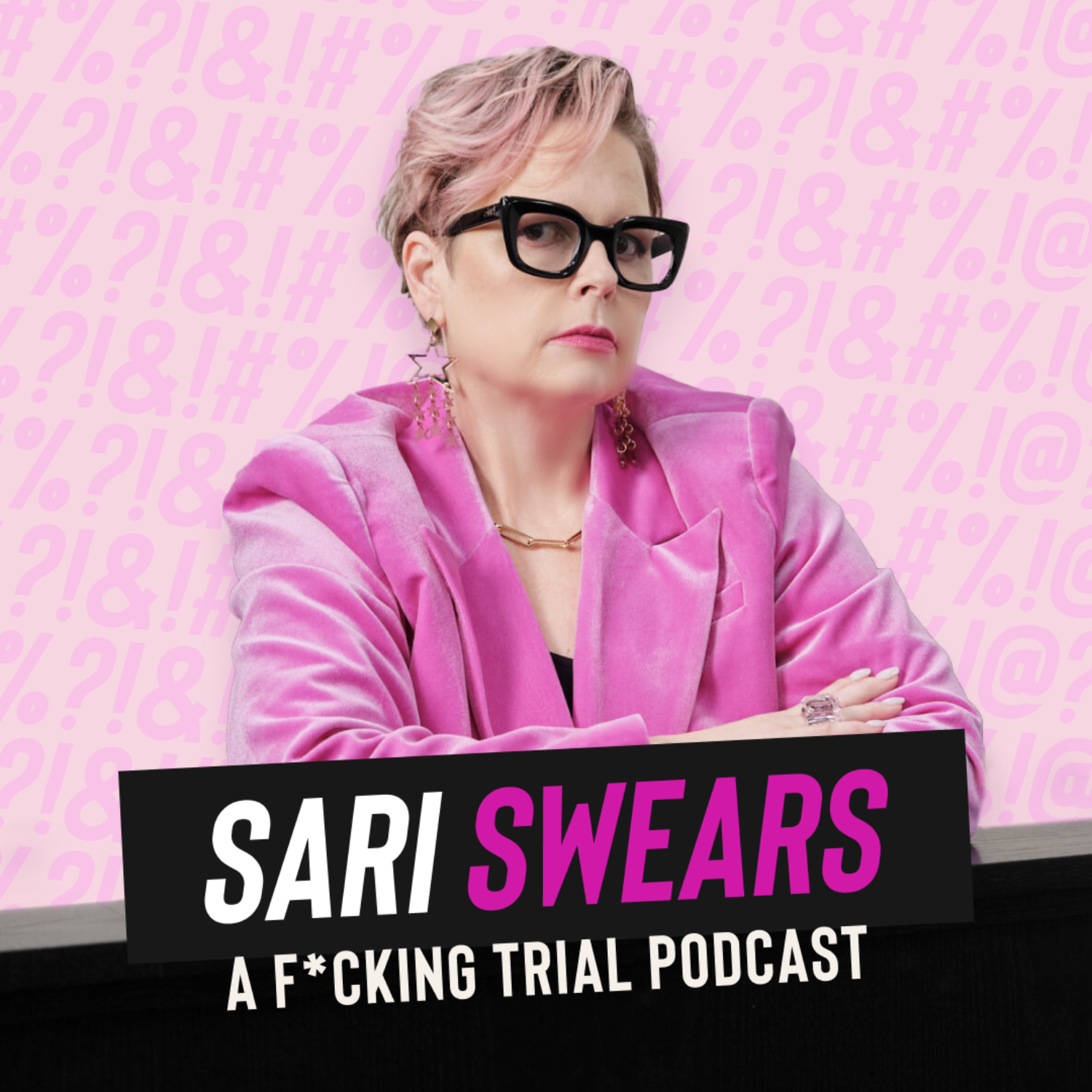
Today is my 54th birthday, which honestly feels surreal to say out loud.
And it got me reflecting on how I somehow went from being a classically trained pianist… to becoming the “Queen of Voir Dire.”
There was no grand plan.
No moment where I suddenly felt ready.
Just a series of moments where my want became bigger than my worry.
In this week's podcast, I share the full story of how I found this work, the risks I took before I could afford to take them, the mentors who changed my life, and the 7 biggest lessons I’ve learned over the last 24+ years.
But more than anything, this episode is about what happens when you stop waiting for certainty and start trusting what you really want.
And THANK YOU for being part of this community and this journey with me. 💖
Love,
Sari
P.S. Speaking of becoming the “Queen of Voir Dire”… I just announced a brand new live webinar happening May 28th! We’re going beyond the FHTH book and into how the H2H Voir Dire method performs in today's courtrooms.
Register now → sariswears.com/webinar
➡️FREE FB GROUP FOR PLAINTIFF & CRIMINAL DEFENSE ATTORNEYS
“The people who change their lives aren’t the ones with the perfect roadmap. They’re the ones willing to keep going before they know exactly how it all works out.”
sari de la motte
Transcription
Sari de la Motte:
Afterwards there's that line of people who are waiting for you, and in that line was an attorney and he said, "I have this big case in Las Vegas. I'd like to have you come help. I'd also like to send you a book that I wrote." I thought, "Look at this guy. He wrote a book." In the mail, a few days later comes on Becoming a Trial Lawyer by Rick Friedman. You're listening to Sari Swears on the Sorry Swears podcast. Well, welcome everyone to another episode of the Sari Swears podcast, and today is my birthday. Thank you. Thank you. I hear all of you saying happy birthday on your walks or in the car or wherever you're listening to this podcast. Yes, I am 54 today.
I am not one of those people that shy away from telling people how old I am because when I tell people how old I am, they're shocked, shocked that I could actually be that old. That's a good thing in my book. I'm joking. I'm getting that little turkey gobbler already, but I'm glad to be alive. Let's put it that way. Not everybody has the privilege of actually living into old age. I was asking my team, what should I podcast on today? They were saying, why don't you tell people about your story and how you got to where you are because we have so many new listeners you may not know. Even if you've been around from the beginning, I don't know that I've ever really talked about how I got where I am today.
This may surprise you, listener, if you've been with us for all eight seasons. I can't believe eight seasons. Crazy. I started this work 24 years ago, back in 2001, 2002. It could be 25 years. My memory again, old, I may be off on that. But I really got into this because I was in grad school for music. I'm a classically trained pianist. You wouldn't tell from the nails and people always ask me if I play, and I don't do as much as I should. I hardly play at all. We have a piano. I used to have two pianos when I was teaching. I really do need to go back and start playing again. But piano's my instrument, and I had an undergrad degree from Pacific University and graduated in 1996. Then I went to grad school thinking that I would go and become a professor. I loved teaching.
Teaching was always the thing that I loved to do, and I loved teaching at the university level. In fact, when I was looking for my grad program, I couldn't figure out what program Portland State University was offering because it was very different from what all the other schools in the area were offering. I finally just ran my finger down the alumni, not alumni, the list of, what am I thinking of, the people who teach. I can't think of it. You're probably shouting it in your car right now. But I'm looking down the list and I find the name of one of the professors and I just pick up the phone and leave her a message saying, "I can't make heads or tails. Is this the right degree program that I'm looking at?"
She calls me and she says, "Well, let's meet. Why don't you come down to my house?" It's funny nowadays, you'd be like, "Who is this person and why are they inviting me to my house and are they going to murder me?" But at that time I just went and that was the first time that I met Mary Cogan. If you have been out here or you know our brand new courtroom, which isn't brand new anymore, it just turned one last month. Our brand new courtroom, I'm still going to call it brand new because it's new to me, it's called the Mary Cogan Memorial Courtroom. She never got to see it, which is a big bummer, but I'm thinking she's out there saying it.
We talked and we talked and we talked and she, at the end of that conversation, offered me a graduate teaching assistantship. I hadn't filled out any forms. She didn't know me from Adam, but she said, "I have a feeling about you." The funny story is when Harold got home, who was also on faculty, there's the word I was looking for. I'm telling you, some things just never came back from chemo brain. I can't find words as easily as I used to. Anyways, when Harold came home, they were together and she said, "I found our girl for our graduate teaching assistantship." He said, "Mary, you can't just go out giving teaching assistantships to random strangers." She said, "Harold, if I'm wrong about her, it'll be on me, but I have a sense about this girl."
I guess it paid off, but that was Mary Cogan in a nutshell. She's that person that finds her own way and decides what she's going to do and goes after it. I became a graduate teaching assistant at Portland State, which was great because I got a free master's degree in return for teaching, which I absolutely loved and I garnered, that's the word I'm looking for, garnered a reputation in that I had to teach sight singing and ear training, which is a very difficult class and there was three of us teaching it. One morning, the first morning, about 45 people showed up to my class and about 19 in the other and 17 in the other. I said, "You guys can't all come to my class." It was super fun teaching there.
But Mary, about the last year that I was there said, "You need to go to this nonverbal communication training," that she had just gone to. She was always looking for how to be better. As a grad student that was poor, I think it was 500 bucks for the week, I was like, "Why do I have to go to this thing? It makes no sense." She said, "It's going to make you a better teacher." I thought, all right, fine. It's a week out of my life and it's $500. I went to this nonverbal communication training, which was being taught by Michael Grinder, who if you have any familiarity with NLP, neuro-linguistic programming, neuro-linguistic programming was created by John Grinder, Michael's brother and I can't remember the first name, but Bandler is the last name of the other guy, so Grinder and Bandler.
Michael was doing these training sessions for people who were in corporations that needed to become better speakers, learn more about group dynamics, and he was also working with elementary school people, teachers. I thought this is just going to be the body language stuff of this person picking their nose and that means they hate you or whatever, and it was not that. It was absolutely, utterly mind-blowing about how you could change the way your message landed based on doing these nonverbal things. I was just hooked. I was hooked. I went home that first night and I looked at his website and I saw that he was going to be in Minnesota the next day and he was going to be over in New York the following day.
I came and I said, "How do I learn more about this? How do I train in this?" He said, "Well, I don't really train outside of this week-long seminar I do every week unless you're a school teacher. Are you a school teacher?" I said, "Well, I teach at the university level." He's like, "No, it's K through 12." I said, "Well, what happens if I just show up wherever you are? I noticed on your website you're in Minnesota and you're in New York, and can I watch you?" He said, "Sure." I had my grad school salary, which was nothing. I put it on a credit card and I flew all over the country for about a year following Michael Grinder around, watching him all day as he was teaching in different schools in different areas, and then asking him questions in the evening.
Taking him out to dinner. I trained myself and when I came back after that year, I hung out my shingle and I started to work in schools as a consultant. I would go and I would sit in these offices and ask to speak to the principal and I finally got hired somewhere. I did that for a while where I was helping teachers manage their classrooms. Then the recession hit and I had to pivot quickly because there was no more money left and no budgets in the school districts to pay for outside consultants. I hired a business coach again before I could afford it, put it on a credit card and said, "How do I take what I've learned working with school teachers and use it working with people in the corporate world?"
She said, "Well, managing kids, managing people, it can't be that difficult." Between her and I, we created three training sessions. That was it. That's all I did. I did a presentation skills training. I can't even remember what it was called now. I did a training called Don't Shoot the Messenger, it was how to deliver bad news and not be shot. I did a training called Cats and Dogs based on Michael Grinder's cats and dogs model, which is how to get along with different types of people, and that took off. Same thing. I started calling and got my foot in the door and words started to spread. Then the Oregonian here did a story on me about my nonverbal communication stuff. A little tiny article at the bottom about this new business in Oregon, and a lawyer saw it.
The Oregonian ended up doing another story on me years later. It was like the front page of the living section, just a full page of me. But this little tiny story he saw and, of course, you all are always wanting to know how to... anything you can figure out to use to your advantage. He saw nonverbal and thought, "Perfect. I need a body language expert to come and help me." He calls me and he says, "I saw this article in the paper and would you be willing to come and help me pick a jury on Monday morning?" This was like Friday, and I've never even stepped foot in a courtroom, and I said, "Sure, I guess. I don't know." He said, "I'll pay you $3,000." I thought, "Okay, I'll be there." Having no idea what I was doing.
It was a criminal trial. In fact, I worked in criminal for several years before I moved out to the plaintiff world, and we would have one panel of six people the whole morning. Voir dire was four days. After that first panel, he came up to me and he said, "What do you think?" He was hoping I would say, "Well, this juror's good for you because they crossed their legs a certain way and that juror's bad for you because they itched their left nostril." Of course, I didn't do any of that because I don't believe in any of that and I wasn't trained in any of that. I said, "Oh, about the jurors, I don't know, but you have all sorts of problems." To his credit, he was like, "Tell me." I got to tell you, you all, I was hooked.
I so wanted to be a part of this high stakes communication where whatever happened at the end was really meaningful. I'm not saying that it's not meaningful to do a presentation well or to get a raise or whatever the things that I was working on in corporate. I worked at Nike, I worked with a lot of big corporations, but this just felt like home to me. The only problem was is that I had no idea what the fuck I was doing, and that can be a problem because I needed to figure it out fast. At first I thought, "Well, you know what? I'm just going to have them bring in their opening statement." I think that's what it's called, or we can talk about what questions to ask jurors, and what I'll do is I'll just help with the nonverbal presentation of it.
Until you all were coming in with such bad content that I was like, "I can't help you deliver this. This doesn't make any fucking sense." Now around that time, the Inner Circle of Advocates called and said, "We hear that you work with lawyers and you work with nonverbal communication." At this time I was working both with lawyers and corporate, mostly corporate with some lawyers. "We'd like you to come and speak for us." I did, of course. I think that was the only time I was ever nervous in a presentation, but I spoke at their Santa Barbara conference and afterwards there's that line of people who are waiting for you. In that line was an attorney and he said, "I have this big case in Las Vegas I'd like to have you come help.
I'd also like to send you a book that I wrote." I thought, look at this guy. He wrote a book. In the mail a few days later comes on Becoming a Trial Lawyer by Rick Friedman. Of course, I had no idea what a big deal that was back then because I didn't know who the fuck Rick Friedman was. I ended up having my first plaintiff case be the one where he won the $104 million Propofol case in Las Vegas. Rick really became my first mentor in terms of plaintiff. Can you imagine? He told me what books to read. I would read them. I would email him with questions. He would answer back. We worked together. We did a lot of things together over those years. Right now, I just have to give credit where credit is due to Rick Friedman, who really shaped me as the plaintiff consultant that I am now.
Eventually, I let go of corporate altogether and went all-in on plaintiff work and that's what I do today. We have some criminal defense in our client list as well, but mostly I work with plaintiff attorneys. If you're a longtime listener, you've probably heard me say practice makes progress, and what better way to practice than with a fellow group of trial attorneys in person and with me. Our two-day Command The Courtroom Masterclass sessions put the H2H method into action. I'm there every step of the way with live coaching and feedback and finish mama fierceness. Don't just take my word for it. Here's what PI attorney Sean had to say about our two day masterclass.
Sean:
My biggest takeaway is that I now have a new approach as to how I'm going to enter the courtroom. It's a new energy, a new spirit, and it really gets me excited because that's actually the more fun part of what we do. I'm looking forward to taking advantage of everything that I learned here.
Sari de la Motte:
Now seats are limited. These are small group, high impact courtroom sessions, not an auditorium full of board attorneys and dull lectures. If you want to change the way you go to trial and turn your practice into progress, visit sariswears.com/masterclass to register for a 2026 class today. That's sariswears.com/masterclass. Now, as interesting or not as that may be for you, I wanted to talk a little bit today about what I learned over this journey of the last 24 years. I've been working with attorneys now for 17 years, plaintiffs for about 15 of those 17 years. I've been working in nonverbal communication for nearly 25 years.
The story of how this pianist, classically trained pianist, was on her way to get a doctorate and piano pedagogy, which means how to teach piano, and wanted to teach at the university level because that was damn so fun. Those three years were so much fun, and how I am now one of the top trial consultants in the United States is due to, I'm going to say, these seven factors that I'm going to share with you that I think also will apply to anybody listening to this podcast today. The first factor, and I think this is a huge one for any of you who has a dream and wants to do something either different or better or whatever it may be, is my want was bigger than my worry.
Here's what I mean by that, is that once I was bitten by the bug of this nonverbal communication and then it even got deeper when I went to court and trial that one time, that first time, is that I was of course worried about all of the how. You've heard me say before that Coach K, and I'm hearing that you love Coach K on the podcast, so we're going to be bringing him back a lot more because I'm glad that you're loving that, because it's fun to podcast with another person, but Coach K always says, "How is the killer of dreams?" There was a lot of how, for sure. How will I ever make it? How will anyone ever know who the fuck I am? How, how, how, how, how?
But I knew after going to that first nonverbal communication seminar and I went back to that week long seminar, I don't know, a dozen times at least after following Michael around for that year, but I knew that I wanted it and that was way bigger. We talk a lot about want. I'll sometimes ask in my coaching sessions to my clients, "What is it that you want?" People say, "What does that matter? I can't have what I want anyway." I think that's the biggest, saddest thing that I hear. You absolutely can have what you want. You just need to have a want that is bigger than your worry because want is the fuel that fuels dreams. It is the thing that continually keeps you going when you think maybe you should quit.
You need to have a want that is so burning inside of you, that there's no possible other outcome that will do because this want is so big. I think so many of you are afraid of actually wanting things because you're not sure how you will get the thing. I'm here to tell you what comes as you keep going. The show never arrives ahead of time. The show never shows up and says, "Well, here are the steps to get to where you want. Step one, step two, step three." It's never that easy. You figure it out as you go and it's messy. Let me just say, it is messy. I have probably made every mistake you can possibly make. From how to brand myself, to marketing, to wrong hires, all of it.
I've made every mistake that you possibly can make, and I now have a multimillion dollar consulting firm that employs seven people, and I'm doing my dream work because my want was bigger than my worry. Two, I got creative. When I first went and talked to Michael and said, "Well, how do I get trained to do what you do?" Basically, that was after his job, bless his heart, that he was still willing to pay me or not pay me, that he was willing to train me. He said, "Well, unless you're a school teacher, I don't have any outlet outside of this week-long training." I didn't accept that. I was like, "Well, what could I do to still have this person train me?" That was huge.
I've had to use that creativity, and creativity is one of our new, we may have not shared our new values with you all yet. We went through another process and really got clear, and creativity is a huge one here, but I've had to use the skill of creativity over the last 24 or 25 years over and over and over again. From uh-oh, schools don't have any money to pay me as an outside consultant anymore, I better pivot to corporate, to uh-oh, lawyers are calling and I don't know what the fuck I'm doing, to uh-oh, I can't just train them on nonverbals, I've got to learn about actually how to put an opening statement together, to all of the other things. It's creativity that has gotten me there. It is my ability to learn and get curious and be creative.
Everything we do, I've created out of my own ass. Obviously, I learned from all the things that I have absorbed over the years and all the training with Michael and all the training with Rick, but when it came time to it, I needed to actually figure it out myself and get creative and throw things out there and see if people wanted the things. Again, we tend to wait a long time. Well, I'm going to wait to see if somebody actually wants the thing that I'm offering. Well, you'll never know if they want it until you offer it and you have to be willing to handle rejection. There was shit ton of rejection as I went through this over the years. Closely related is number three, if I didn't take no for an answer.
When I trained myself after flying around the country and working with Michael, I was like, "Well, how do I let schools even know who the fuck I am and how to get them to buy this consulting package that I just made up and think that they might need?" I would go to schools, physically go with a packet of materials that I had made. I remember like creating this audio program, some videos that I had made and buying the stickers that you can put on the front of the DVD, remember those? Actually creating them at home and putting the stickers with my logo that I made myself on that and printing out these things on letterhead that I had made. I walked in with this binder full of materials and I asked for the principal, and what was the answer?
"Who the fuck are you?" Well, they didn't actually say that, but the principal's busy and here's what I said. I said," Great, I'll wait." Sometimes I would sit there and wait for three hours until they knew they weren't going to get rid of me and they finally gave me five minutes to talk to them about what I was offering. I did that so often until one school finally let me in the door. Then word started to spread and I had more and more work. I didn't take no for an answer because here's the thing you all, nobody else is going to determine my destiny. I'm not going to go up and have somebody say no and be like, "Well, that's it. I guess this isn't going to work." It took lots of school and lots of sitting and lots of trial and error, but no was not an acceptable answer.
Number four, I was outrageously persistent, like outrageously persistent. When I was working with Rick, on every break I'd be like, "How do I break into this? What should I do? How do I do it?" I asked everybody and anybody. I called Lisa Blue. She didn't know who the fuck I was, but she was the only one at that time talking about voir dire, and I got her book and she took my call. I was outrageously persistent. I don't know who the fuck I thought I was, but I was out there being, "I am going to do this work no matter what it takes." Then Lisa said, "You know, who you need to talk to is so-and-so." Then that person said, "You know, who you need to talk to is so-and-so." I picked up the phone and I made that call every damn time.
I remember I was talking to Rick once and he had his take back to the courtroom down there in Florida. I remember he was doing those in the mid or late 2000s, the teens, I think it was 2011 or 2012, somewhere in there. He said, "Well, come and take back the courtroom." I remember it was like four weeks away, and I said, "Your itinerary or your agenda is already set with speakers." He's like, "Great, I'll put you at 8:00 AM on Saturday morning." I said, "Rick, thank you, but nobody's going to come at 8:00 AM on a Saturday morning." He said, "Oh, they'll come if I tell them to come." I went down to take back the courtroom. I ended up speaking there twice, I think. By golly, that room was full of 200 people at 8:00 in the morning when I was there.
I was outrageously persistent. Five, I decided, and this is so huge, that failure wasn't an option. It was not anything that I was ever going to entertain. I wanted this, therefore there had to be a way to make it happen. Now, for a while that meant that I also had to do other things. As I said before, I was doing corporate along with legal. I was both one foot in the rowboat and one foot on the pier. I was still trying to make money over here because I was a really sought after trainer in the corporate world, but I knew that I wanted to get into the legal world. While I was doing that and attempting to do that with all the things I've just been telling you, I'm reading everything I possibly can read.
I'm listening to podcasts, I'm calling people, I'm asking for advice. Failure was not an option. It was not anything that I was ever going to entertain. Six, I put my money where my mouth was. I backed myself. I backed my own horse. I put things on credit because I knew I was good for it. I went to Michael Grinder training before I could afford it. I hired my first assistant before I could afford it. I went to take back the courtroom not knowing whether Rick was going to pay for me to get there or how I was going to do it. Every opportunity, I seized on it, even if it cost money and because it costs money. Because that meant I had skin in the game.
I think so many people who are looking for advice on how to actually actualize their dreams are waiting for it to be easy, cheap, outline for them ahead of time and guaranteed. That is not how the world works. I knew that if I was going to make good on this, I had to have skin in the game and that meant putting my money where my mouth was. I was saying, "Hey, I'm good at this." So I backed myself up with money at the same time by getting things before I could actually afford them. By getting training I knew I needed before that training would actually end up netting me anything, by putting myself out there constantly and that all costs money, but look at where I am today.
Number seven, and we're going to wrap up. I went all in. At one point I came to the fact that if I really wanted to get good at this, I needed to spend all my time over here, one, and two, I no longer wanted to do the corporate training. Now there's something that happens around here. I've noticed this all my life. I think this is true for everybody, but for me specifically, and that is when my want for something is gone, just my output in it is crap. It's probably better than most people on their bad day, but for me it's crap. I knew the minute that I stopped wanting to do corporate training that that was the time to stop doing corporate training.
Because it wasn't going to be as good as when I loved corporate training, and my want was growing and growing the more I started working with plaintiff attorneys. Now, I want to be really clear about something. Nothing had happened yet. I still was not known. I had a very small group of followers. They're very loyal. Many of them are still with me today, working with me today, but there was nobody that said, "Hey, here's a great $100,000 contract." I was still living hand to mouth. There was no evidence that this would ever pay off. I just want to be clear. When I went all in with plaintiff attorneys, I was saying no to making $10,000 a day of corporate training. They would call and I would say no, because I wanted to put all my energy in the plaintiff world.
Again, that took money and it took a hell of a lot of faith in myself. But I would say, once you are totally and completely committed, go all in. I had to explore it for a while. I had to see if this was something I really wanted to do. I had to work with people. I had to see if I had something to say, but once I recognized, you know what, I do love this and this is all I want to do, that is all I did. With no evidence that it would ever work out. I'm telling you that if you have a dream and you have something that you are just dying to do, I know there are people out there that are like, "I want to niche down. I want to just do pediatric stroke cases or I just want to do child death cases. That makes me weird, right?"
I'm like, "No, that makes you sought after." If that's what makes your heart sing, then use these seven things that I have learned over my journey to get you to being in the place where I'm at right now, which is absolute and total utter love for my work and for the people that I work with, which is you all. So, happy birthday to me. My gift, I'm giving to you, which is these seven things that I hope help you really live the life of your dreams. All right, we'll talk next week.
Thank you for listening to the very end of this episode A Plus. I'm going to ask you to subscribe to the podcast, whether you're one of the weirdos that like to watch it on YouTube or you just listen, make sure you hit that subscribe button.
It helps the podcast grow and let other people find me you all, but don't stop there. Be sure to leave me a five star review on Apple Podcasts or wherever you listen. We want this podcast to reach as many ears and eyes as possible. Thanks again for listening and we'll see you next time. Bye-bye everybody.


Free Training
8 Strategies to 8-Figure Verdicts
I am giving you the FIRST 3 strategies FOR FREE!
If you’ve ever wondered how the nation’s top trial attorneys consistently hit 8-figure verdicts, this is your chance to see it in action.
- How to master your mindset before you even walk in the courtroom
- Ways to connect with jurors so they solve your problems for you
- Key communication tactics that turn doubt into verdicts
And much more…

Subscribe to the Podcast
Tune in weekly as Sari shares tips that will help you up your game at trial, connect with jurors, and build confidence in your abilities so that you’ll never worry about winning again.
You're more than the size of your verdict.
(I swear.)


Sign up for trial tips, mindset shifts, and whatever else is on Sari’s brilliant fucking mind.